
Why now is the moment for automation in logistics

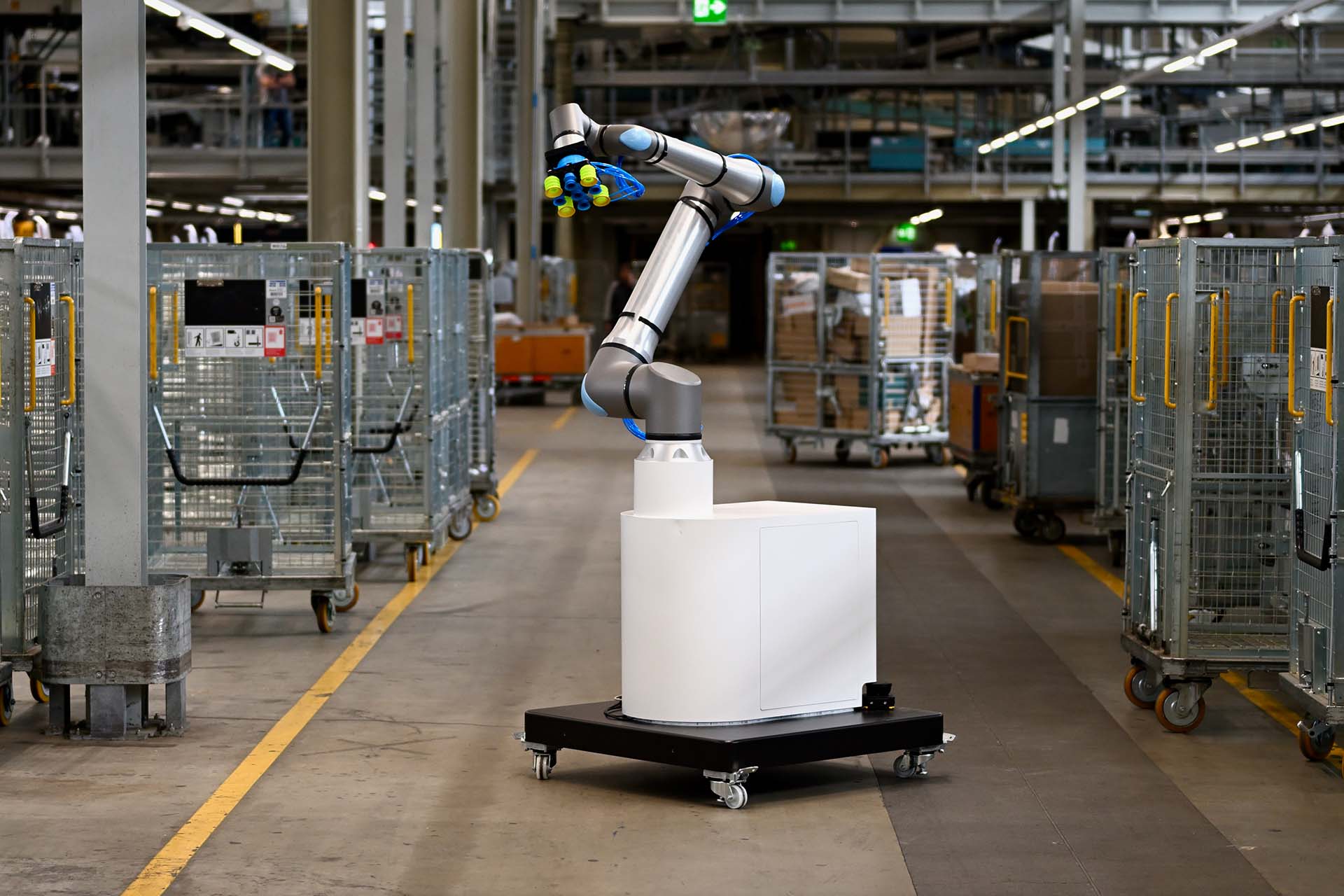
At the same time, the sector faces a persistent labour gap: repetitive, physically demanding, and injury-prone roles are increasingly difficult to fill. Around 75% of warehouse operators in advanced economies report ongoing recruitment challenges, increasing costs while constraining productivity.
Traditional automation has already been implemented at scale: conveyor belt systems move parcels, luggage, and more across warehouses, airports, and sorting centres. However, conveyors alone do not eliminate manual handling. Across parcel, e-commerce, and warehouse operations, loading and unloading items remains a highly labour-intensive and physically exhausting role, representing billions in annual labour costs in advanced economies.
The next steps in logistics automation are robotic solutions that can drop-in to any workflow and handle the intrinsic variety of use-cases. The opportunity for robotics is clear, and today the technology is available to deliver a rapid wave of automation.
Robotic hardware, particularly industrial robot arms, have been deployed at scale for over 60 years with more than four million industrial robots operating globally today. As a result, manufacturing costs have fallen dramatically, bringing automation into direct economic competition with human labour where it was once prohibitively expensive.
At the same time, advances in computing and AI have transformed what robots can do. Software iteration cycles that once took months now take hours. Physical AI systems enable machines to learn, generalise, and respond flexibly to novel situations.
This convergence matters. It means robots can handle the variability within logistics at a competitive price point today. It also means roll-out speed and learning speed create a positive feedback cycle - every pick, placement, and correction improves the system.
The future of logistics belongs to operators who scale intelligently - not by adding more people or larger machines, but by deploying automation that adapts as fast as the world around it. In 5 years, the idea of being a logistics operator without robots will seem absurd.
Join the team
physical work, for anyone, anywhere.